
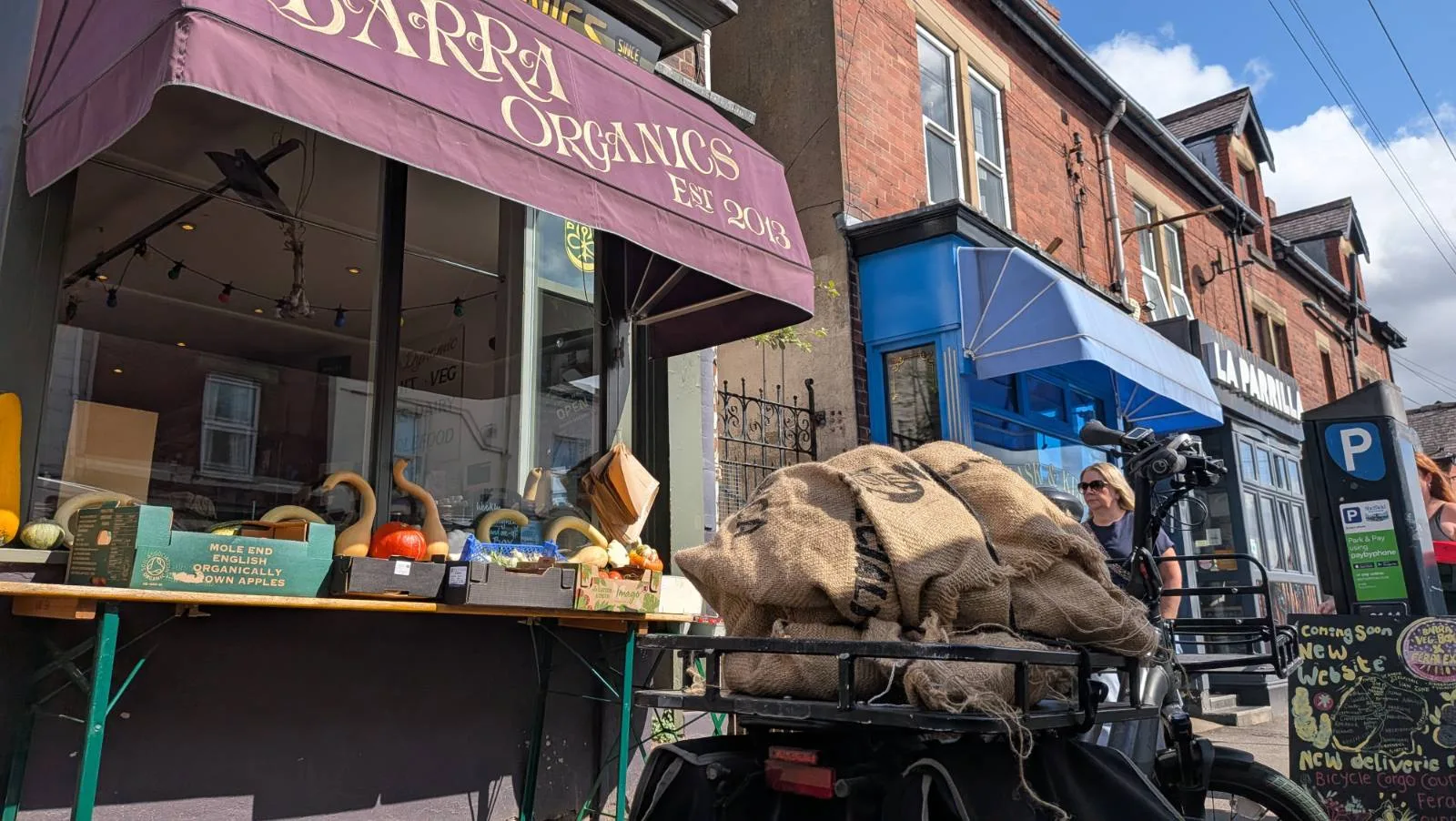
TL;DR: Average 312g of CO2 per parcel delivered. One method is huge in comparison (ULEV petrol). Some are zero (Bicycle). Majority are “OK” (Royal Mail). Overall, it’s complicated.
We are currently in the process of working on our 2027 plan and one rabbit-hole we went down was our deliveries by car. The oppressive heat of 2026, caused by Big Oil concentrated our minds as giving them any money is galling, yet we do.
When we drive we have use of a ULEV (ultra low emission vehicle), but it is petrol (pictured below). The value is minimal so “swapping” for an EV (electric vehicle) would require capital from elsewhere, such as solar powered roasting which is prioritised for 2027.

Nottingham is where a lot of our customers reside because that is where we used to be and the ULEV is the vehicle of choice to deliver there, but even ultra low emissions are still emissions. One litre of petrol produces around 2.3 kg of CO2 (or 2300 g). A typical Nottingham round trip route from Sheffield uses about 6 litres of petrol with 15 deliveries: (2300*6)/15 = 920 g of CO2 per delivery. Royal Mail state “164g CO2e per parcel delivered” (https://www.royalmail.com/sustainability/environment). To reach Royal Mail’s standard we would need to deliver about 80 parcels in one run, which isn’t something we expect any time soon. Cycle deliveries are zero carbon, we do use electric bikes, which require charging on the grid but our tariff is renewable and power required is negligible and therefore for simpleness rated “zero”.
The split between the methods is also slightly simplified: Approximately 50% of our deliveries are by Royal Mail. 25% by bike. 25% by ULEV. Therefore, the average is 312 g CO2 per parcel delivered which is almost double Royal Mail.
It’s complicated
The personal delivery in Nottingham is preferable from a customer service point of view. Royal Mail do lose or damage parcels sometimes, whereas we don’t. When we personally know our customers, some quite well, it adds enjoyment to the job. Hard to quantify when looking at cold-hard stats of grams of carbon. We also have reusable boxes for some customers but even our best estimates makes the overall carbon saved at a few grams.
Off-setting is problematic at best and not something we want to use to justify carbon release, but a quick calculation when a 1 tonne carbon credit is about £20 it would only cost about £6.50 a year to have “zero emissions”. We release about 350kg of carbon a year for Nottingham deliveries, based on going to Nottingham once a fortnight in our current ULEV.
The ULEV is shared between the business, and the two director’s personal use. Above calculations only includes business use which is about 50% of total use of the ULEV so everything is doubled when personal miles are taken in to consideration. A small EV has a carbon debt of about 1.5 tonnes, although some estimates make this as high as 5 tonnes, but we’re using the lower carbon debt in our calculations since the higher ones seem to be by people who are anti-EV. The carbon debt would take approximately two years to pay off when all use is considered.
Pence per mile for petrol is currently around 10-12p. With 100% solar it will be 0p (nil). Just like roasting, the car will only be charged using our own solar. Insurance would go up around £200/year with an EV but total petrol is around £400/year so there is a saving.
The ideal EV doesn’t really exist (yet)
When we buy anything for the business, it’s thoroughly considered and we want to make sure it suits our needs, especially for something as expensive as a vehicle. We have over a decade of experience of running a small business and inevitably there has been some poor purchasing decisions. But you don’t learn without making mistakes. Two articles have recently been published in publications we read: The SUV tyranny: where have all the normal family cars gone? by Coco Khan in the Guardian, and The Car Got Better. The Deal Got Worse by Worse on Purpose which highlight a couple of problems. The illusion of choice when it’s almost impossible to buy anything but a SUV and how it’s been taken over by the financial industry.
The ideal car for us would be small, has proper buttons and not a touch screen. Most new cars are too fat. We also don’t want to scroll a screen to turn the AC off/on or change a radio station. Tactile buttons can be found by muscle memory and don’t move due to a software update. It’s dangerous to have to look away from the road just to do something that has been previously intuitive. New cars around ten years ago had all the important in-car comforts on the steering wheel which is perfect, why did we allow screens to take over? Privacy is also important to us which is why you won’t find unnecessary trackers on our website, so a car that wants access to our phones or requires an app or subscription to be fully functional is not a car we will buy. There does appear to be some smaller EV cars coming on to the market so it’s something we continue to look at.
This pretty much leaves us in the position of wanting to change our deliveries to electric ASAP to not give Big Oil any more money but not wanting to buy an EV and keep our petrol ULEV while it works and suits our needs. The argument to change to an EV is and isn’t there at the same time, even for a business like us that is focused on environmentalism.
Let us know any thoughts or suggestions you have by emailing coffee@roastinghouse.co.uk or our mastodon.